What you are actually hearing
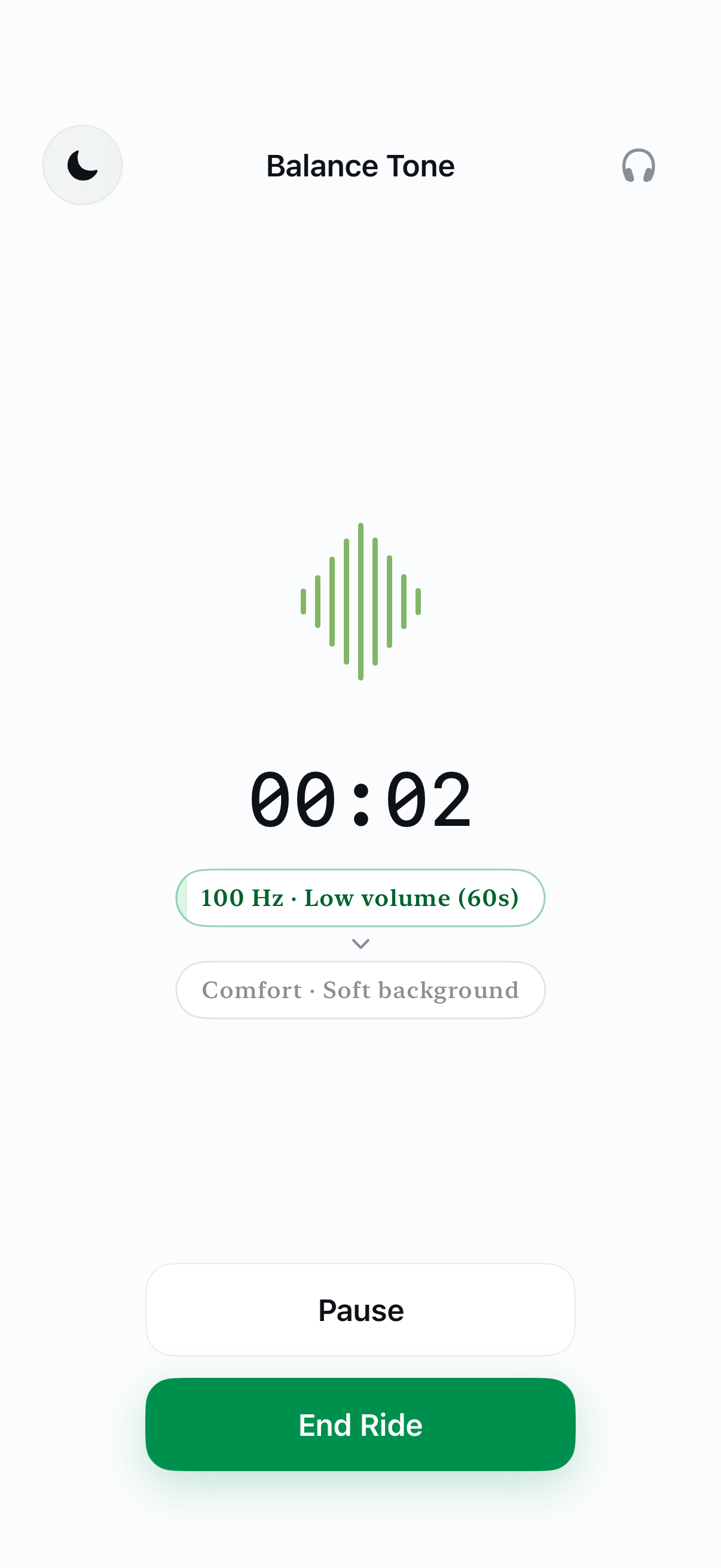
100 Hz means the speaker is vibrating a hundred times a second. On headphones that comes through as a low, even hum. There is no melody and no voiceover. In AntiSick the balance-tone segment lasts about 60 seconds, then it either stops or hands off to a softer background track, depending on the session you picked.
A preliminary 2025 study tested a one-minute 100 Hz pure tone before brief motion exposures. Its human trials used equal bilateral sound delivered by purpose-built speakers at 80–85 dBZ near the temporal regions; some trials involved a swing or simulator, and the real-car exposure lasted three minutes. Those conditions are not equivalent to playing a downloaded tone through ordinary phone speakers or headphones, so the study does not establish that AntiSick produces the same result. It is early evidence, not proof of prevention or treatment.
Keep it short, quiet, and close to your ears
Turn the volume down before you start. You should be able to talk over the tone. If it feels like pressure or makes you wince, it is too loud.
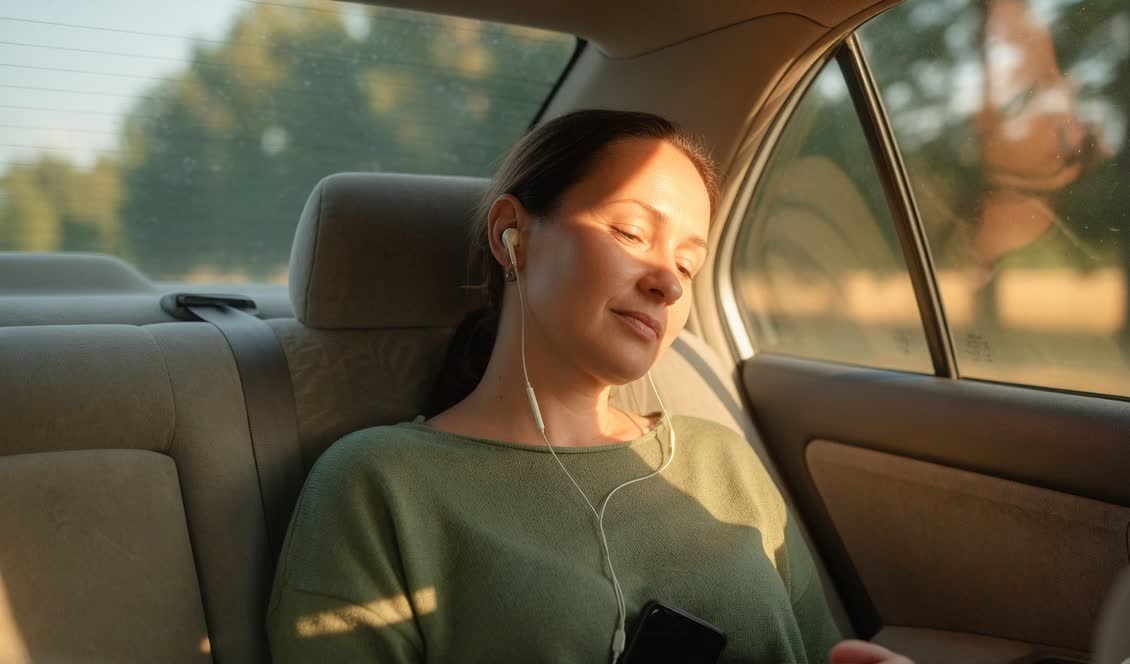
Headphones are strongly recommended. A phone speaker in a cup holder smears a 100 Hz tone into cabin rumble, and you will be tempted to raise the volume to hear it. AntiSick does not lock the session behind a headphone check, but the tone is designed for a low, even path into your ears, not the car stereo.
Do this only as a passenger. The driver should not be wearing headphones or fussing with audio settings.
When people usually try it
The least awkward time is before the vehicle moves: parked, bags in, headphones in, one minute, then put the phone down. You can also run the short session later if you already feel off and do not want to look at a screen. It is a poor fit as all-day background. If you want something under a long trip, that is the other audio path.
Comfort soundscapes are a different tool
Rain, a stream, or a soft instrumental bed is there to be ignored. Those tracks are not labeled with a medical frequency, and they can run for the whole ride. The 100 Hz tone is the opposite: brief, obvious, easy to overdo.
AntiSick keeps the two from collapsing into one slider. In Audio settings you pick a session:
- 100 Hz · 60s — the short tone only, then it ends.
- 100 Hz · 60s + Comfort — the tone first, then a soundscape for the rest of the trip. This is the default.
- Comfort only — skip the tone and stay with the background track.
If the hum annoys you, use Comfort only. If you like a minute of tone and then want quiet weather in the background, use the mixed session. You do not get a better result by stacking both at full volume.
What to do if it feels wrong
Stop. Drop the volume. Take the headphones off. Looking out the window still matters more than any track. Persistent or severe symptoms belong with a clinician, not with another frequency.
Not a treatment: AntiSick’s 100 Hz option may support some passengers. It is not intended to diagnose, prevent, treat, or cure motion sickness. Keep volume low, and never use it while driving.
Listen instead of staring
Audio is one of three modes in AntiSick. Each mode includes one full free ride.
Questions
What is a 100 Hz motion-sickness tone?
It is a steady low tone at 100 cycles per second. In AntiSick it plays quietly for about 60 seconds. It is not music and it is not a medical treatment.
Do I need headphones?
Headphones are strongly recommended for 100 Hz, so the tone stays even and you can keep the volume low. AntiSick will not block you without them, but a car speaker is a poor way to hear a balance tone.
Is louder better?
No. Start low. If the tone is harsh, drop the volume or stop. A 100 Hz session is not something to turn up until you feel it in your chest.
How is this different from rain sounds or soft music?
The tone is a short, plain signal. Comfort soundscapes are meant to sit in the background for the whole trip and do not use a treatment-frequency story.
Sources
- MedlinePlus: Motion Sickness
- CDC Yellow Book: Motion Sickness
- Gu et al. (2025): 1-minute 100 Hz pure-tone study
This page explains a product option. It is not medical advice and does not claim that a 100 Hz tone will stop symptoms.